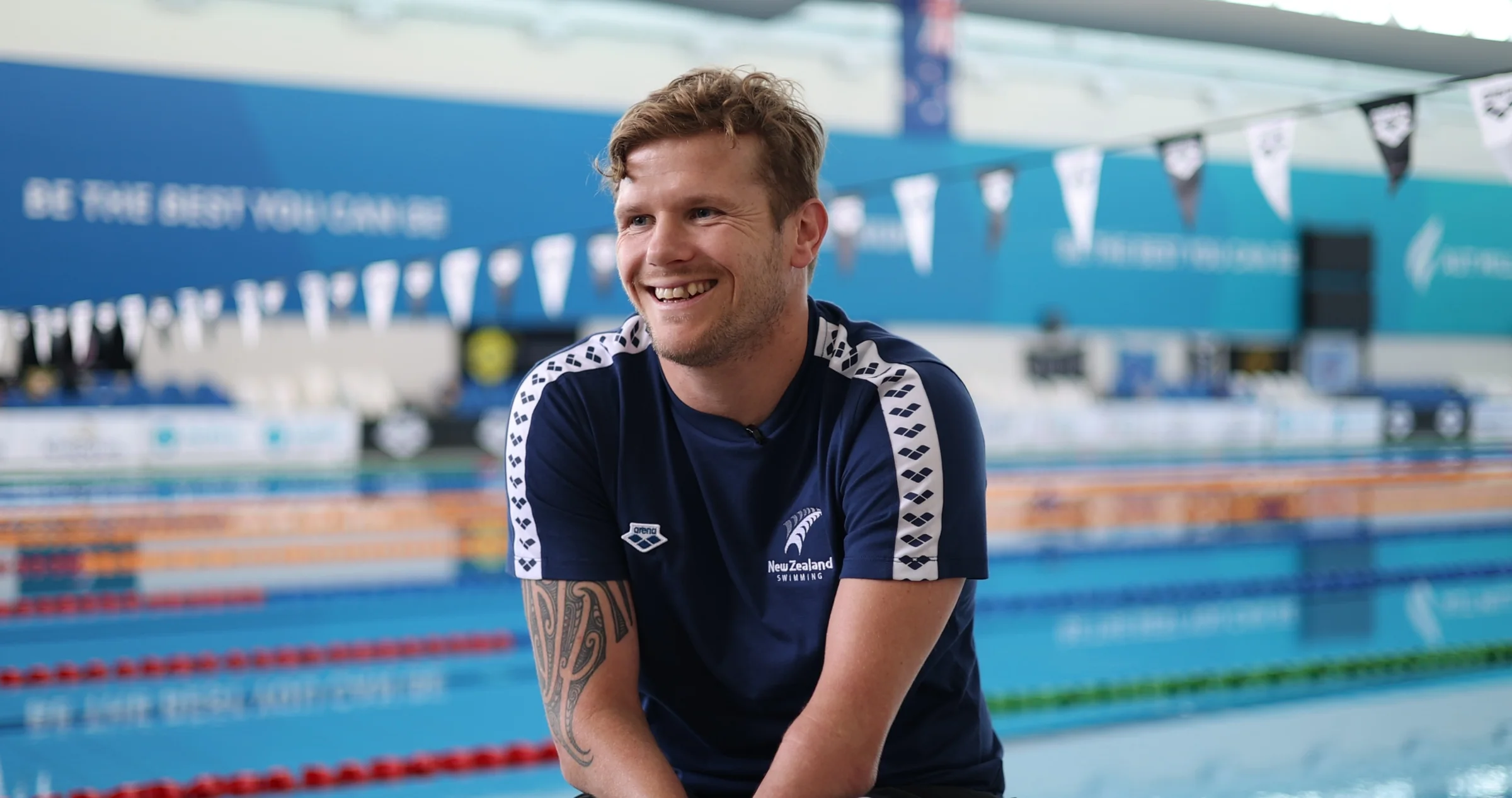
Body Image and Success with Cameron Leslie
Go outside the lanes with Cameron Leslie for a deep dive into his body image challenges, performance journey and the international success that has defined his career.
What the Water Gave Cameron Leslie
Cameron Leslie did not begin swimming with a Paralympic career in mind.
He started because he wanted to feel safe in the water. As a child in Northland, he joined an after-school programme for young people with disabilities. From there, he moved into a swim school and then a club, with each organisation passing on the support and information he needed.
Swimming became part of his life almost by accident. He enjoyed being around the water, grew more competitive through his teenage years and eventually began competing internationally. At 16, his first major experience was difficult. He performed poorly, felt he had failed and wanted to walk away.
His parents encouraged him to stay for another year or 18 months. He did, and the decision eventually led to the Beijing Paralympic Games, three Paralympic appearances and a long career at the top of his sport.
Cameron Leslie - Diving Into Body Image
Loads from YouTube only when you choose. That provider receives your connection information.
But Leslie’s story is about more than achievement. It is about the complicated process of becoming comfortable in a body that does not fit familiar expectations.
Swimming makes that process particularly exposed. Athletes spend much of their time in swimwear, on display before they even enter the water. Leslie describes the experience of growing up with a disability while also feeling that his body looked different from the norm.
“There’s not much being hidden by togs and stuff like that.”
The comment is understated, but it captures the pressure of being seen. Body image concerns do not necessarily disappear with age, confidence or sporting success. They can remain present even when someone has achieved more than they ever expected.
For Leslie, the water offered another way of understanding himself. In the pool, appearance became less important than movement, competition and capability. Swimming gave him a place where his body was not simply observed. It was active and effective.
“The water became such a vehicle for me.”
That vehicle also took him towards a wider sense of belonging. Through para-swimming, Leslie met people with different experiences and ways of moving through the world. He was part of something larger, and no longer felt defined by being outside the norm.
The wider lesson is that confidence does not always come from learning to love every aspect of our appearance. Sometimes it comes from finding an environment where we can experience ourselves differently.
Sport can provide that environment. It can create structure, friendship and a sense of purpose. It can help people see their bodies through what they can do, rather than through the assumptions placed upon them.
Leslie is modest about his influence. If younger athletes choose to look up to him, he says that is their decision. He is simply pursuing something he enjoys.
“I’m just going to be me at the end of the day.”
There is a quiet strength in that attitude. Leslie’s story does not ask to be reduced to disability or achievement. It is a story about finding confidence, belonging and freedom in the place where he feels most at home.
For Cameron Leslie, that place is the water.
About these stories
These are composite stories shaped from recurring experiences. They do not identify or portray individual people. If a story brings something up for you, support is available through 1737, Be Heard and independent pathways.